
Skip to content

From waste to fuel-grade gas.

How a Bio-CBG plant works — the gas, the six-step flow, the right feedstock, the machinery, fuel quality and the second income stream.

01 — Know the gas

Biogas, CBG or CNG?

Three stages of renewable gas — each one cleaner than the last. Fossil CNG is a different origin entirely.

01

Biogas

Raw gas from anaerobic digestion — methane mixed with CO₂, moisture and H₂S.
RawPurity
02

Biomethane

Biogas purified into methane-rich gas, with impurities and CO₂ removed.

PurifiedPurity
03

CBG / Bio-CNG

Compressed biogas — a purified, renewable fuel ready for vehicles, industry or the grid.

Fuel gradePurity
Fossil CNG

Compressed natural gas — normally drawn from fossil sources, not from waste.

Key answerCompression does not clean gas. Purification and testing come first.
02 — Follow the flow

How a CBG plant works

Microbes work without oxygen. One plant produces two products: fuel-grade gas and nutrient-rich digestate.

01

Collect

Weigh and accept feedstock at the gate.

02

Prepare

Sort and shred into a repeatable feed.

03

Digest

Microbes break it down and make gas.

04

Clean

Remove H₂S and water from raw gas.

05

Upgrade

Strip out CO₂ to reach fuel quality.

06

Deliver

Test, meter and sell to the buyer.

Qualified liquid may return to the process.
Digestate Finish + test FOM / LFOM sale
Key answerBoth output routes need quality control and actual buyers.
03 — Choose the input

Which feedstock is best?

The best feed is clean, affordable, regular and tested — not merely the one with the highest yield.
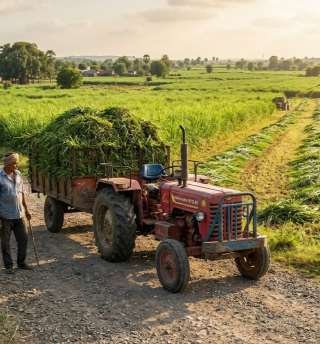
Farmer beside a tractor trolley loaded with fresh crop residue
Supply beats yield.A steady, year-round feed keeps the digester's biology stable.

Animal manure

Cattle, buffalo, poultry*

Mill residues

Press mud, tested by-products

Crop residues

Straw, maize stover*

Energy crops

Napier, maize / sorghum silage

Food organics

Clean kitchen and market waste

Specialist streams

Sludge and organic effluent*

* Feed-specific design, pretreatment and permission checks apply.

Key answerSecure year-round supply. Test solids and methane yield.
04 — Know the machinery

Which machine does what?

Buy a complete working system — not an isolated digester. Every block has a job.

Reception

Weighbridge + screens

Weigh incoming loads and reject contaminants.

BLOCK 01

Preparation

Shredder / pulper + dosing

Make a consistent, repeatable feed.

BLOCK 02

Digestion

Tank + mixer + heating

Keep the methane biology stable.

BLOCK 03

Gas train

H₂S removal + dryer + upgrader

Remove gas impurities step by step.

BLOCK 04

Delivery

Compressor / injection skid

Dispatch accepted gas safely.

BLOCK 05

Fertilizer

Separator + finishing line

Finish and test the organic manure.

BLOCK 06
Key answerEquipment selection changes with feedstock, quality and buyer route.
05 — Make it saleable

How we make fuel-quality gas

Purity, methane recovery and energy use all matter.

  1. 1

    Clean raw gas

    Remove H₂S, water and particles.

  2. 2

    Upgrade methane

    Remove CO₂ and monitor methane recovery.

  3. 3

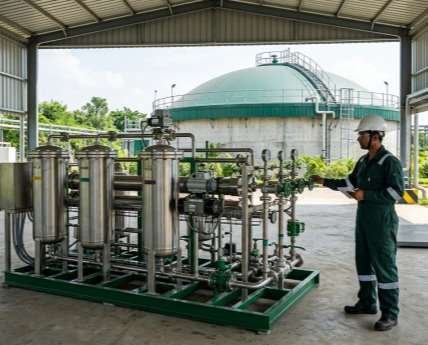
    Test, isolate and dispatch

    Meet the standard and buyer / network rules.

    IS 16087:2025
Engineer inspecting a stainless-steel gas upgrading skid beside a digester

Dispatch gate

Batch A On-spec · Deliver
Batch B Off-spec · Isolate
Key answerOff-spec gas must be isolated — not delivered. Pressure is route-specific.
06 — Sell the second product

Is digestate another income stream?

Potentially, yes — but raw slurry is not automatically saleable fertilizer. It has to be finished and tested.
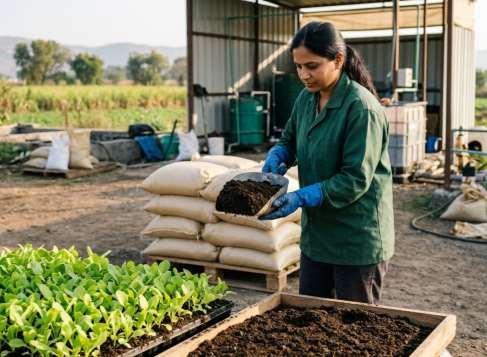
Worker inspecting finished organic manure beside packed sacks and seedlings
FOM

Fermented organic manure (solid)

FinishTestPackSell
LFOM

Liquid fermented organic manure

TreatTestSell locally
Key answerIncome needs compliant quality, real sell-through and a net selling price.