
Waste to fuel.
Built to last.
Biolizer helps you understand, size and plan compressed biogas plants that turn organic waste into saleable fuel and fertilizer — with the feed, buyers and numbers checked first.
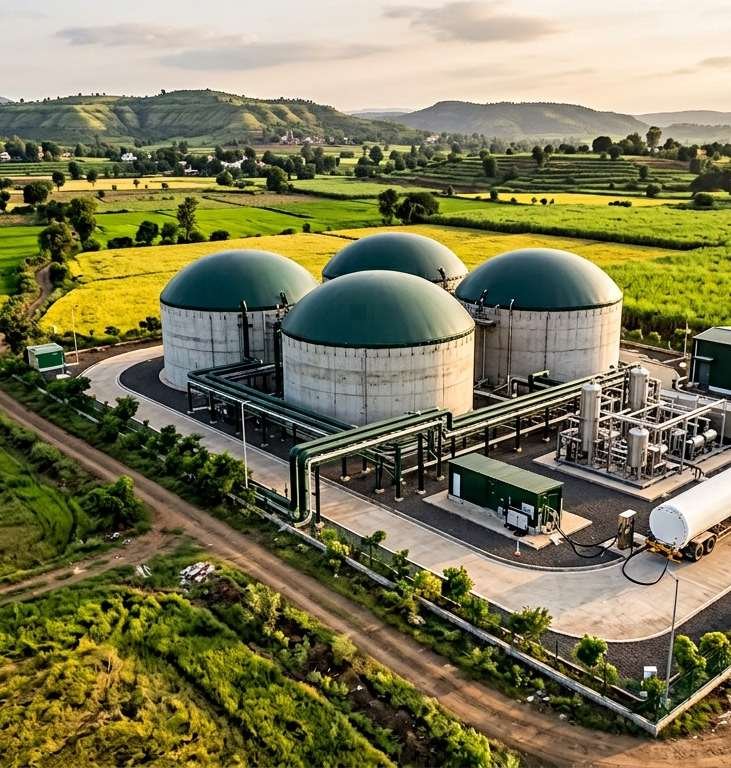
~100 t feed per day
One plant. Two products. Fuel-grade CBG and organic manure — but only when the feed is secured, the buyer is real and the numbers hold after interest, depreciation and tax.
What a CBG plant sells
Microbes work without oxygen and leave two products behind. Both need quality control — and actual buyers.
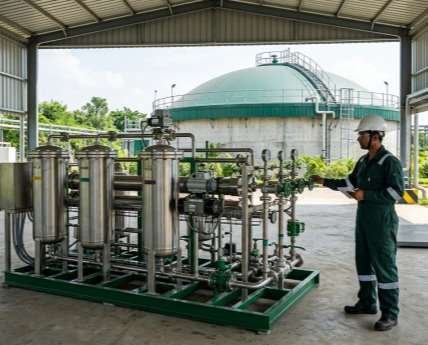
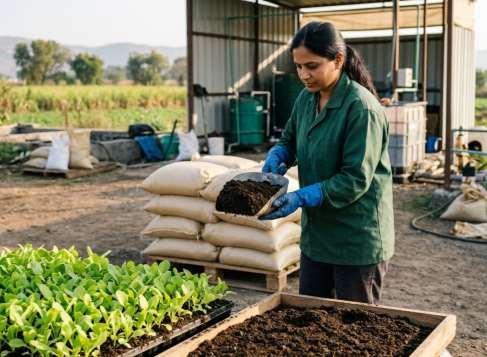
Six steps from waste to fuel
Buy a complete working system — not an isolated digester. Every step has a job, and both outputs are tested before they leave.
Collect
Weigh + accept
Prepare
Sort + shred
Digest
Microbes make gas
Clean
H₂S + water out
Upgrade
CO₂ out
Deliver
Test + meter + sell
Technology
Gas stages, the six-step process, feedstock, machinery, gas quality and fertilizer.
Plant & Economics
Compare 1–20 TPD plants and see why operating surplus is not profit.
Schemes & Compliance
GOBARdhan support, eligibility ceilings, safety and site permissions.
Contact
Share your feed, site and scale — we'll help you check the case.
Review 2–5 TPD first
Larger plants are better only when supply and buyers scale with them. Plant capex climbs from ₹8 cr at 1 TPD to ₹100 cr at 20 TPD.
What should you do first?
Secure the feed. Secure the buyer. Then choose the plant.
Test the feed
Quantity, quality, seasonality and delivered cost.
Secure both markets
A CBG buyer and realistic fertilizer sales.
Validate the project
Site, permits, budget, team and supplier guarantees.
Got waste? Let's check the numbers.
Tell us your feedstock, location and the scale you're considering.